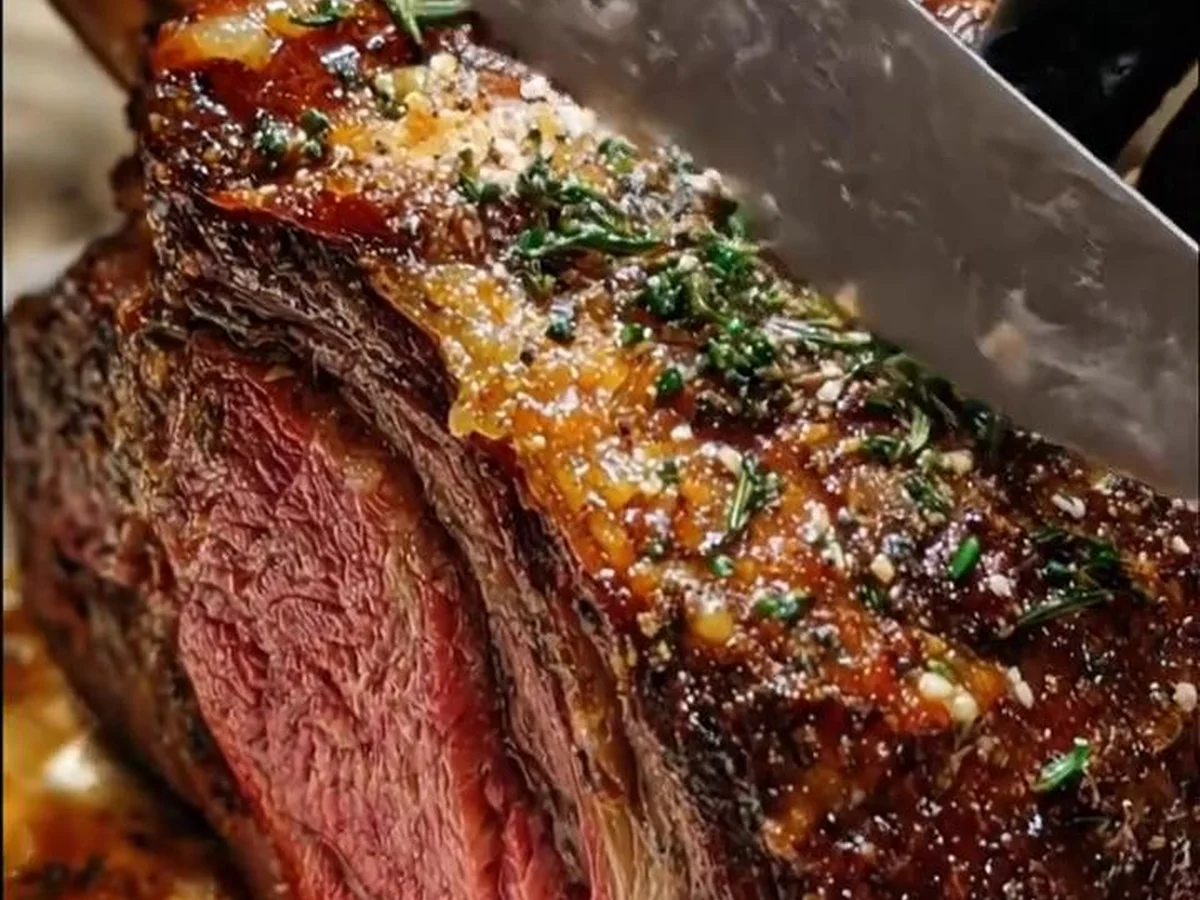
There’s nothing quite like the decadence of a Bone-in Prime Rib Roast to elevate any gathering. The mere thought of this majestic cut of beef conjures images of celebratory feasts, warm family gatherings, and the comforting aroma that wafts through your home as it roasts to perfection. Whether it’s a holiday dinner or a special occasion, this dish reigns supreme when it comes to impressing guests and satisfying the appetite. The enticing scent of garlic, rosemary, and thyme envelops the atmosphere, teasing your senses, while the juicy, succulent meat beckons you to take your first bite. With each mouthful, the rich flavor melts away, leaving you in a state of sheer bliss, making this a quintessential comfort food for meat lovers. Let’s delve deeper into the delightful world of the Bone-in Prime Rib Roast and explore everything from its history to how to serve it perfectly.
The Origins and History
Bone-in prime rib roast, also known as standing rib roast, isn’t merely a fancy cut of meat; it has roots deeply entrenched in the culinary traditions of Yorkshire, England. Historically, prime rib was initially reserved for the wealthy, served during festive gatherings and special occasions within stately homes. This cut of beef is derived from the prime section of the rib area, often showcasing the tender marbling that makes it incredibly flavorful and juicy. The English would create elaborate roasts to exhibit their wealth and culinary skills, incorporating herbs and spices available at the time. Today, this dish has transcended cultural borders, making its way onto tables around the globe and becoming a favorite for its sumptuous flavor and rustic simplicity. Its evolution showcases how food can both unify and evoke nostalgia, regardless of one’s background.
Why You Will Absolutely Love This Recipe
- Unmatched Flavor Profile: The combination of garlic, fresh herbs, and quality beef creates a taste sensation that epitomizes rich, savory perfection.
- Ease of Preparation: Despite its impressive look, the preparation is straightforward, making it manageable even for novice cooks.
- Crowd-Pleaser: This roast is a guaranteed hit among guests, serving as a stunning centerpiece that invokes oohs and aahs.
- Delicious Leftovers: With a roast of this size, leftovers are an added bonus – perfect for sandwiches, salads, or reheating as comforting meals throughout the week.
Deep Dive into the Ingredients
Understanding each ingredient that contributes to the majesty of a Bone-in Prime Rib Roast will deepen your appreciation for this dish. First up is the star of the show: bone-in prime rib roast (5–7 lbs). This cut is prized for its incredible tenderness and marbling, which leads to an incredibly juicy roast when cooked properly. Opting for bone-in rather than boneless enhances flavor due to the marrow in the bones, which infuses the meat while it cooks.
Next, we have olive oil. This essential ingredient doesn’t just help your seasoning adhere to the meat; it also plays a key role in achieving that beautiful, caramelized crust. The gentle flavor of olive oil complements the beef without overpowering it, allowing the natural flavors to shine through.
Then comes kosher salt. While it may seem simple, the grains of kosher salt dissolve into the meat to enhance its inherent flavors, aiding in moisture retention. This larger grain size makes it optimal for applying an even coat without oversalting.
Freshly cracked black pepper adds an aromatic heat that contrasts beautifully with the rich depth of the beef. Using freshly cracked over pre-ground not only enhances the flavors but also contributes to the overall texture of the crust.
Garlic, minced to perfection, works its magic by infusing the roast with a savory essence that deepens with cooking. The scent alone is mouthwatering, and it complements the natural sweetness of the beef.
Lastly, the fresh herbs rosemary and thyme bring a wonderful earthiness. Their olive green leaves contrast against the juicy red meat to create a feast for the eyes and the palate. If fresh isn’t available, dried herbs can be substituted, but nothing beats the brightness of fresh herbs.
Pro Tips for Perfect Results
To achieve the ultimate Bone-in Prime Rib Roast, there are several pro tips you should consider:
- Temperature Control: Always start with meat at room temperature. It ensures even cooking. Take the roast out of the refrigerator at least an hour before cooking.
- Searing: Sear the roast at high heat before reducing the temperature. This step caramelizes the outside, locking in moisture and developing a rich crust.
- Use a Meat Thermometer: To ensure perfect doneness, use a meat thermometer. Aim for an internal temperature of 130°F for medium-rare. Remember, the roast continues to cook while resting.
- Resting is Key: Allow the roast to rest for at least 20 minutes before slicing. This step enables the juices to redistribute, resulting in a tender and juicy roast.
Serving and Pairing Suggestions
A Bone-in Prime Rib Roast stands beautifully on its own, but the right accompaniments can elevate the dining experience further. Classic pairings include creamy horseradish sauce or a rich red wine reduction. If you’re looking for sides, consider serving this roast with Roasted Brussels Sprouts, Garlic Mashed Potatoes, or Yorkshire pudding. To complement the richness of the beef, a robust red wine such as Cabernet Sauvignon or Malbec will accentuate the flavors beautifully, making your meal truly memorable.
Storage, Freezing, and Reheating
After enjoying your Bone-in Prime Rib Roast, it’s essential to store any leftovers properly. Allow the roast to cool to room temperature before wrapping it tightly in plastic wrap and storing it in the refrigerator, where it will remain fresh for up to three days. If you wish to preserve it longer, slicing it and placing it in an airtight freezer-safe container will allow you to keep it in the freezer for up to six months. When reheating, ensure you do so gently in an oven or on the stovetop to avoid drying it out.
Frequently Asked Questions (FAQ)
1. Can I use a different cut of beef?
While prime rib is ideal due to its tenderness and flavor, you can use a ribeye roast or sirloin; however, the flavor and texture will differ.
2. How do I know when my roast is done?
Using a meat thermometer is the most accurate method. For medium-rare, a temperature of 130°F is recommended, while medium is about 140°F.
3. What’s the best way to slice the roast?
Always slice against the grain to ensure the meat is tender and easy to chew. Allow the roast to rest before slicing for juicier results.
4. Can I make gravy from the drippings?
Absolutely! Use the drippings from the roasting pan, add some flour to create a roux, and incorporate beef broth for a delectable gravy.
Conclusion
A Bone-in Prime Rib Roast is a culinary masterpiece that brings people together, creating memories that linger long after the meal is finished. This dish is not just a roast; it’s an experience in flavor, aroma, and satisfaction. Inviting this roast to your table will surely make any occasion special.
The History of This Recipe
The Bone-in Prime Rib Roast has its roots in the culinary traditions of the United Kingdom, where it was a popular choice among the aristocracy during the 18th century. The rich, marbled beef from the rib section, combined with the flavor imparted by the bone, made it an impressive centerpiece for lavish feasts.
As the dish gained popularity, it found its way to America, where it became a staple at special occasions and family gatherings. Grilling and roasting techniques evolved, allowing home cooks to enjoy this succulent cut with enhanced flavors.
Today, the Bone-in Prime Rib Roast symbolizes both luxury and comfort, representing a beloved tradition in modern dining. Its rich history and delightful taste continue to make it a favored choice for celebrations across cultures.
Bone-in Prime Rib Roast
INGREDIENTS
- 1 bone-in prime rib roast (5–7 lbs)
- 2 tablespoons olive oil
- 2 tablespoons kosher salt
- 1 tablespoon freshly cracked black pepper
- 6 cloves garlic, minced
- 2 tablespoons fresh rosemary, chopped
- 2 tablespoons fresh thyme, chopped
INSTRUCTIONS
Preheat your oven to 450°F (230°C).
In a small bowl, combine the olive oil, minced garlic, rosemary, thyme, salt, pepper, and Dijon mustard (if using) to create a herb paste.
Pat the prime rib roast dry with paper towels to ensure a good sear.
Rub the herb paste all over the surface of the roast, ensuring to coat every side evenly.
Place the roast bone-side down on a rack in a roasting pan. If you don’t have a rack, create a makeshift one using crumpled aluminum foil.
Pour the beef stock into the bottom of the roasting pan to prevent drippings from burning and to create a flavorful base for gravy.
Insert a meat thermometer into the thickest part of the roast, making sure it doesn’t touch the bone.
Roast the prime rib in the oven at 450°F (230°C) for 20 minutes to develop a nice crust.
Reduce the oven temperature to 325°F (160°C) and continue roasting for approximately 1.5 to 2 hours, or until the internal temperature reaches 130°F (54°C) for medium-rare. Adjust cooking time according to desired doneness.
Once cooked, remove the roast from the oven and tent it loosely with aluminum foil. Let it rest for 20-30 minutes to allow the juices to redistribute.
After resting, carve the roast into slices and serve with the pan juices or gravy.
Time & Calories:
Total Time: Approximately 3 hours (including resting)
Calories: Approximately 650 calories per serving (based on a 7 lb roast, serving 8)
NOTES
Enjoy your delicious homemade Bone-in Prime Rib Roast !